Visual learning library
See the biblical relationships, then examine every line.
These diagrams, timelines, comparisons, and study companion images help visual learners grasp the structure of an argument without replacing the passages, context, or evidence.
A visual is a doorway, not the final authority.Each diagram states what it is trying to show, links the supporting passages, and names the conclusion it cannot establish by itself.
Yahweh is the one divine Being, eternally shared by three distinct Persons.
The visual begins with Scripture's confession of one God and then follows the divine name, works, glory, personal distinctions, and saving roles revealed across the Old and New Testaments.
The Persons are distinct: The Father is not the Son. The Son is not the Holy Spirit. The Holy Spirit is not the Father.
THE ETERNAL SON BECOMES FLESH↓JESUSHis given human name, announcing “Yahweh saves”Matthew 1:21 ; Luke 1:31 ; John 1:14
| Designation | What Scripture reveals |
|---|---|
| Yahweh | The one divine covenant name. Exodus 3:14–15 ; Deuteronomy 6:4 |
| Son / Word | The eternal Person who was with God and is God. John 1:1–3, 14, 18 ; 17:5 |
| Jesus | The human name given to the incarnate Son, announcing “Yahweh saves.” Matthew 1:21 ; Luke 1:31 |
| Christ | His office as the promised Messiah and King. Matthew 16:16 ; Acts 2:36 |
| Holy Spirit | Scripture's personal designation for the divine Person who speaks, wills, teaches, and sends. John 14:26 ; Acts 13:2–4 ; 1 Corinthians 12:11 |
Old and New Testament witness
Yahweh texts are applied to Jesus.
| Yahweh in the Old Testament | Jesus in the New Testament | What the pairing shows |
|---|---|---|
| Prepare the way of YahwehIsaiah 40:3 | The messenger prepares the way for JesusMark 1:2–3 | Jesus' coming is described with Yahweh's coming text. |
| Every knee bows and every tongue swears to YahwehIsaiah 45:22–23 | Every knee bows and every tongue confesses Jesus Christ as LordPhilippians 2:9–11 | Jesus receives the universal allegiance belonging to Yahweh. |
| Everyone who calls on Yahweh's name will be savedJoel 2:32 | Confess Jesus as Lord and call on the LordRomans 10:9–13 | Paul applies Yahweh's salvation promise to Jesus. |
| Yahweh laid the earth's foundation and His years never endPsalm 102:25–27 | The Father addresses the Son with that Creator textHebrews 1:8–12 | The Son stands on the Creator side of the Creator-creation distinction. |
| Isaiah sees Yahweh's gloryIsaiah 6:1–10 | John says Isaiah saw Jesus' gloryJohn 12:37–41 | John identifies Jesus with the glory Isaiah saw. |
The Son is not the Father.Yet New Testament writers apply Yahweh's texts, works, saving name, honor, and glory to Jesus.
Divine identity
Scripture identifies the Spirit with God.
- One singular name with the Father and the SonMatthew 28:19
- Lying to the Holy Spirit is lying to GodActs 5:3–4
- The Spirit speaks the words spoken by YahwehHebrews 3:7–11 ; Psalm 95:7–11
- Paul identifies the Spirit as the speaker in Isaiah's vision of YahwehActs 28:25–27 ; Isaiah 6:8–10
Personal agency
Scripture portrays Someone, not merely something.
- Teaches, reminds, testifies, guides, speaks, and hearsJohn 14:26 ; 15:26 ; 16:13–15
- Speaks, calls, and sendsActs 13:2–4
- Distributes gifts as He wills1 Corinthians 12:11
- Intercedes according to God's willRomans 8:26–27
- Can be grievedEphesians 4:30
One divine life and action
Father, Son, and Spirit share divine works and attributes.
| Divine reality | Father | Son | Holy Spirit |
|---|---|---|---|
| Creates | 1 Corinthians 8:6 | John 1:3 ; Colossians 1:16–17 | Genesis 1:2 ; Psalm 104:30 |
| Gives life and raises | John 5:21 | John 5:21, 25–29 | Romans 8:11 |
| Knows hearts and God's depths | Romans 8:27 | John 2:24–25 ; Revelation 2:23 | 1 Corinthians 2:10–11 |
| Eternal | Psalm 90:2 | John 1:1–3 ; 8:58 | Hebrews 9:14 |
| Sanctifies | 1 Thessalonians 5:23 | Hebrews 13:12 | Romans 15:16 |
Distinct roles
The three Persons act in one saving purpose.
Difference of role does not mean difference of deity.The three Persons are not independent gods or unequal grades of being.
What the picture helps us see:Yahweh is not the Father's private name in contrast with Jesus and an unnamed force. Scripture reveals one divine name and Being, three personally distinct agents, and the eternal Son entering human history under the given name Jesus.
Read in context: Exodus 3:14–15 ; Deuteronomy 6:4 ; Isaiah 40:3 ; Matthew 28:19 ; John 1:1–18 ; 5:21–23 ; 14–16 ; Acts 5:1–4 ; Romans 10:9–13 ; Hebrews 1:1–12
The gospel is the story of God bringing us home to Himself.
The good news begins with God, names what sin has broken, centers everything on Christ, and ends with resurrection life in God's renewed creation.
Made for fellowship
Humanity is made in God's image to know Him, love Him, and live under His good rule.
Genesis 1:26–31 ; 2:15–25Sin brings guilt and death
Rebellion alienates us from God and brings corruption, judgment, and death into human life.
Genesis 3 ; Romans 3:9–23 ; 5:12–21God promises rescue
Through covenant, prophecy, and sacrifice, God promises the Redeemer who will bear sin and defeat evil.
Genesis 3:15 ; 12:1–3 ; Isaiah 52:13–53:12The Son comes, dies, and rises
Jesus fulfills the promise, gives Himself for sinners, rises bodily, and reigns as Lord.
John 1:1–18 ; Romans 4:23–5:11 ; 1 Corinthians 15:1–28Grace brings us into God's family
Those united to Christ are forgiven, justified, adopted, and indwelt by the Holy Spirit.
Romans 8:1–17 ; Ephesians 1:3–14 ; Titus 3:3–7God makes all things new
Christ returns, the dead are raised, creation is renewed, and God dwells with His people forever.
1 Corinthians 15:50–58 ; Revelation 21:1–7 ; 22:1–5What the picture helps us see:The gospel is not merely escape from destruction or improvement within a system. It is God's work in Christ to reconcile sinners, make them His children, raise them, and dwell with them forever.
Read in context: Genesis 1–3 ; Luke 24:25–27, 44–49 ; Romans 5–8 ; Ephesians 1–2 ; Revelation 21–22
One people share one Hope because they belong to one Christ.
Paul does not build the church around two permanent classes with different relationships to Christ. He piles up seven declarations of Christian unity.
Center and sourceJesus ChristOur life, righteousness, resurrection, and inheritance
One bodyAll who belong to Christ
One SpiritIndwelling every believer
One hopeThe shared calling of the church
One LordJesus Christ
One faithTrust in the same gospel
One baptismPublic union and allegiance
One God and FatherOver all, through all, in all
Shared inheritance in ChristAdoption now, resurrection at His return, and life with God in the renewed creation
What the picture helps us see:Different gifts, callings, ministries, and rewards do not divide believers into separate covenant hopes. Everyone who has the Spirit belongs to Christ and is an heir with Him.
Read in context: John 10:14–18 ; Romans 8:9–17 ; Galatians 3:26–29 ; Ephesians 1:3–14 ; 2:11–22 ; 4:1–6
Understanding grows as the circle of context widens.
A verse is never less than its wording, but it is always more than an isolated sentence. Each larger context helps us hear the same words more faithfully.
1
VerseAttend to the actual words and grammar.
2
ParagraphFind the complete thought and its connections.
3
ChapterFollow the local development of the argument or narrative.
4
BookHear the author's purpose, themes, audience, and structure.
5
Whole ScriptureTrace how the canon reiterates, develops, fulfills, and qualifies the claim.
The TeacherThe Holy Spirit illumines the Word He inspired.He opens our understanding without bypassing grammar, genre, history, or the whole counsel of God.
What the picture helps us see:Context does not move us away from the verse. It protects the verse from being made to carry a meaning its inspired setting will not bear.
Read in context: Nehemiah 8:7–8 ; Luke 24:25–27, 44–49 ; Acts 17:10–12 ; 2 Timothy 2:15 ; 3:14–17 ; 2 Peter 1:19–21
Every claim should show where it came from and how far it reaches.
The site separates the source of a claim from the reasoning built upon it. This allows a reader to test both the evidence and our conclusion.
What does the passage explicitly state in context?
What do primary documents and responsible historical work establish?
How do grammar, genre, argument, and canonical context explain the evidence?
What conclusion is probable, possible, or still debated?
Why does the claim matter for knowing, trusting, and following Christ?
What the picture helps us see:A strong conclusion should never hide the steps between the text and the claim. When certainty changes, the label must change with it.
Read in context: Proverbs 18:13, 17 ; Luke 10:25–28 ; Acts 17:2–3, 10–12 ; 2 Timothy 2:14–19 ; 1 John 4:1
Study-specific diagrams
Open the visual argument that matches your question.
These links jump directly to the diagram inside each complete study.
01
Grace, faith, and obedienceConnected gospel flow
View diagram →02Bodily resurrectionContinuity and transformation
View diagram →03The Son and the angelsHebrews 1 comparison
View diagram →04John 1:1 clause mapEternity, distinction, and deity
View diagram →05The Son and all creationColossians 1 relationship map
View diagram →06The Holy Spirit's agencySpeaking, willing, teaching, and sending
View diagram →07Sacrifice and atonementFulfillment centered in Christ
View diagram →08The AkedahTest, interruption, and provision
View diagram →09Genesis family lines and panoramaGenealogy branches and event-response map
View diagram →10Blood-policy developmentDated policy timeline
View diagram →11Testing prophetic claimsDiscernment pathway
View diagram →Study companion images
Pictures support reflection. Scripture and evidence carry the study.
These images accompany the linked studies. They are not studies or evidence by themselves.
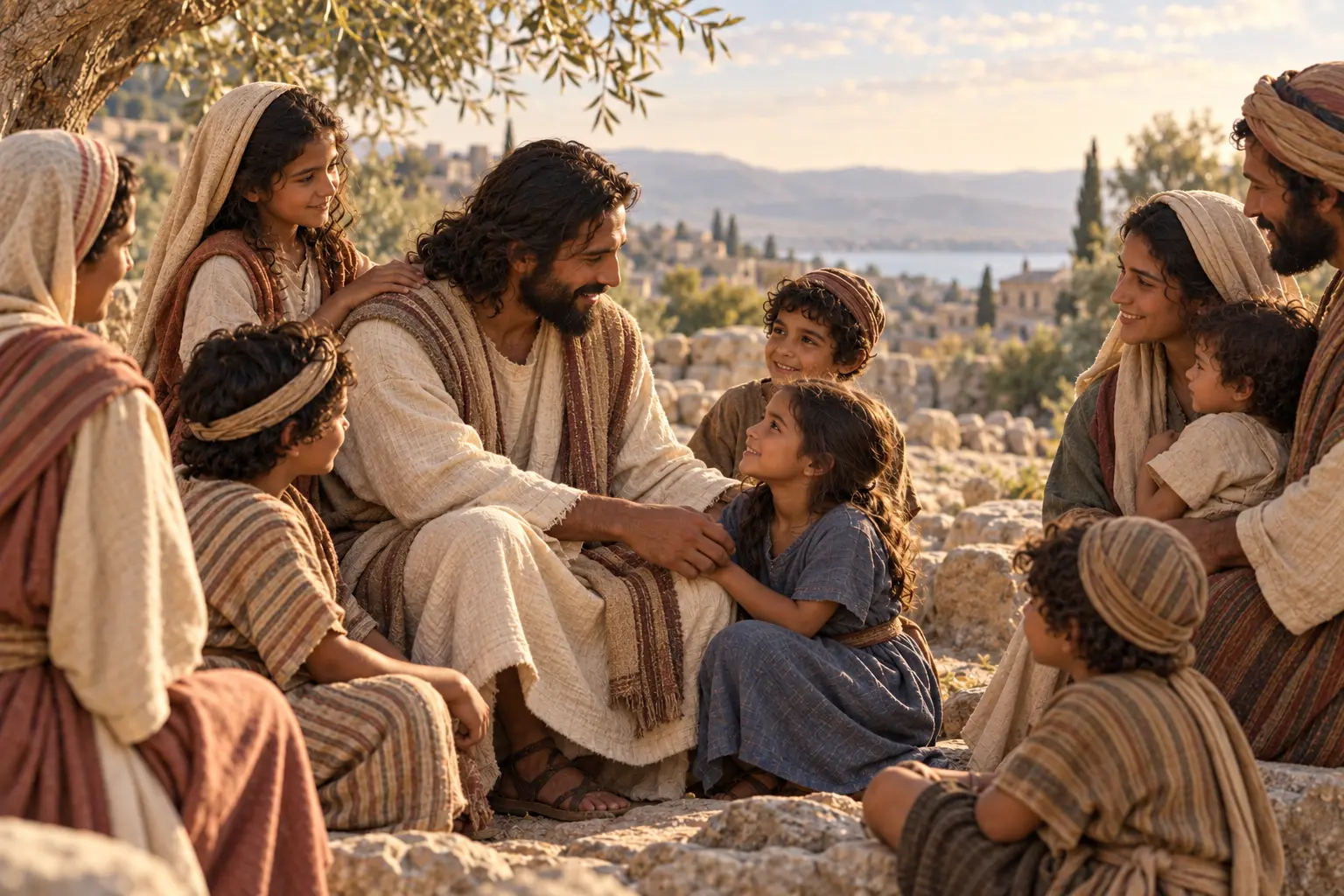
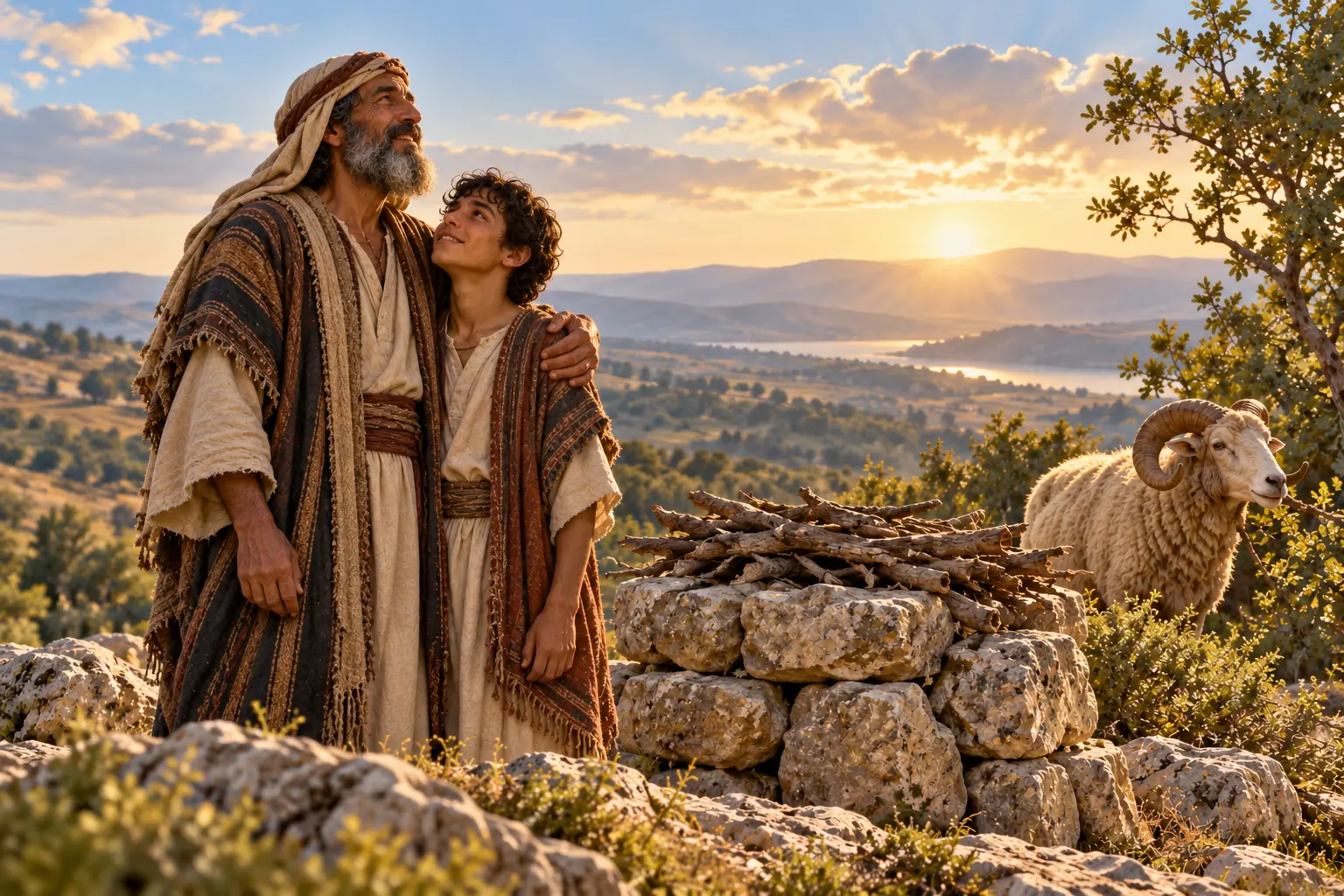
Human figures are represented with regionally plausible Levantine and Southwest Asian complexions and features. These images remain artistic meditations, not exact reconstructions.